
AI coding agents can now read a codebase, plan a change, edit several files and run tests. I use them every day on client work. They make me faster, but only because I treat their output like code from a talented junior developer: useful, quick, and always reviewed.
Where they save real time
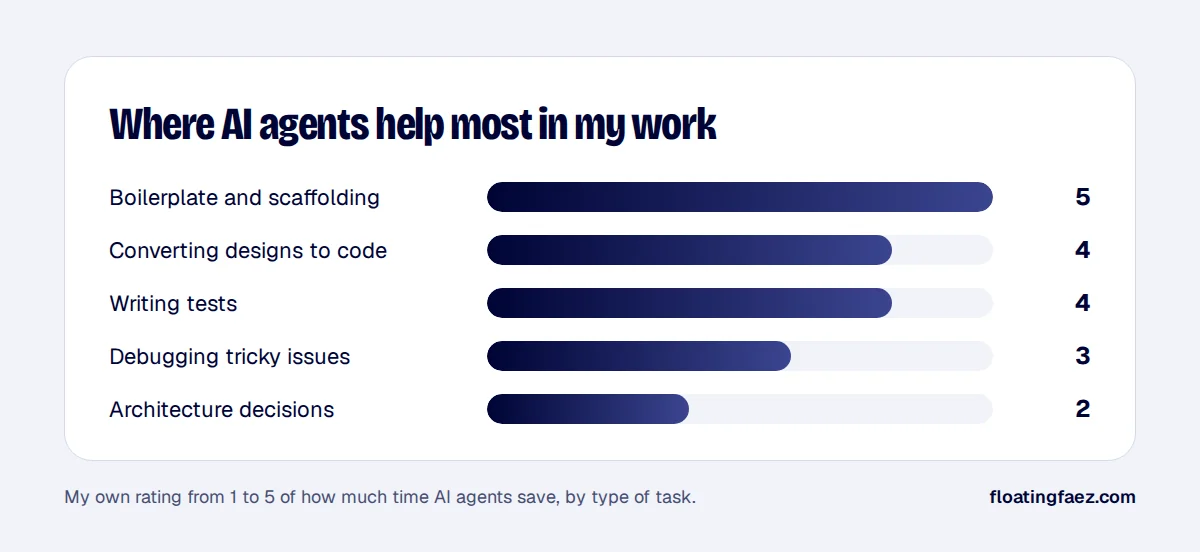
- Boilerplate: scaffolding plugins, API endpoints, components and configuration.
- Design to code: turning a mockup or HTML prototype into components or builder pages.
- Tests: writing unit and end-to-end tests for code that already works.
- Migrations and refactors: renaming, updating APIs, moving code to new patterns across many files.
- Documentation: READMEs, handover notes and inline comments.
Where they introduce risk
- Confident mistakes: code that looks right and passes a quick glance but handles edge cases badly.
- Security: missing input validation, unescaped output in WordPress templates, or secrets pasted into code.
- Outdated patterns: suggestions based on old library versions.
- Scope creep: agents that “helpfully” change files you didn’t ask about.
My guardrails
- Clear instructions in the repository: coding standards, what not to touch, how to test.
- Small, reviewed changes: I read every diff before it’s committed, the same as a pull request from a colleague.
- No secrets in prompts: API keys and client credentials stay in environment variables.
- Tests and staging: changes run on staging, with automated tests where they exist, before going live.
- Client data stays private: I don’t paste customer data into tools that aren’t approved for it.
- I’m accountable: the client hires me, not the tool. If AI wrote it and it breaks, it’s still my job to fix it.
What it means for clients
You get work delivered faster, especially the repetitive parts, and more of my time goes to the parts that need judgement: architecture, performance, security and making sure it actually solves your problem.
Curious how this could speed up your project? Book a free call.