
Writing descriptions for hundreds of products is slow and expensive, so it’s no surprise that stores turn to AI. Google’s guidance is clear that AI-generated content isn’t a problem in itself: what matters is whether it’s helpful, original and accurate. Generic copy that repeats the manufacturer’s text, or that invents features, is where stores get into trouble.
What goes wrong
- Same text as everyone else: when every store selling the same product asks AI for “an SEO description”, the results look alike.
- Invented details: the model guesses materials, sizes or certifications.
- Keyword stuffing: prompts that ask for keywords produce awkward, repetitive copy.
- No human check: errors go live on hundreds of pages at once.
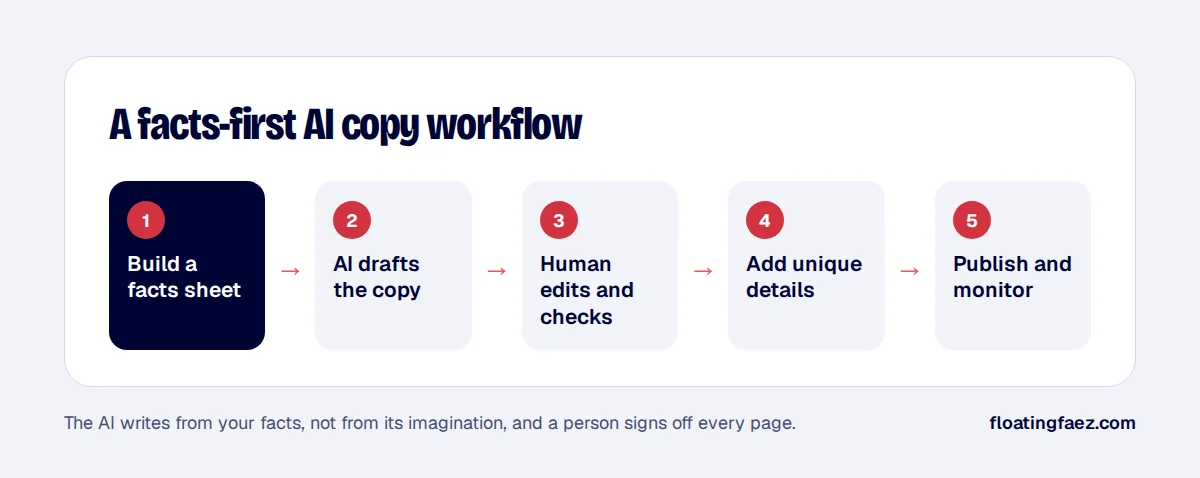
A workflow that works
1. Start from a facts sheet
For each product, collect verified facts: attributes, dimensions, materials, compatibility, care instructions, what’s in the box, who it’s for. Pull them from your product data and supplier sheets. This is the most important step.
2. Give the AI a style guide
Describe your brand voice, the reader, the structure you want (short intro, key benefits, specifications, care), and things to avoid. Tell it explicitly: use only the facts provided, and flag anything missing instead of guessing.
3. Add what only you know
Real photos, your own testing notes, common customer questions, what people say in reviews, how it compares with your other products. This is what makes the page different from every other store’s.
4. Human review, every page
Check facts, fix tone, and read it as a customer would. Batch the review, but don’t skip it.
5. Publish in stages and measure
Roll out a category at a time. Watch impressions, clicks and conversion rate in Search Console and analytics before you do the next one.
Automating it on WooCommerce
Products can be exported through the WooCommerce REST API, sent to a language model with your facts and style guide, and saved back as drafts for review. That turns weeks of writing into days of editing, without giving up quality control.
Interested in a workflow like this for your store? It’s a typical AI feature project.