
More shoppers now ask an AI before they search. Google shows AI Overviews and offers AI Mode, ChatGPT and Perplexity answer with sources, and many people read the answer without clicking ten blue links. If your products aren’t in those answers, a growing share of buyers never sees you.
There’s no secret trick here, and be wary of anyone selling one. AI search systems still rely on crawling, indexing and ranking. What changes is what they look for in a page.
1. Make sure AI crawlers can reach you
- Check
robots.txtisn’t blocking the crawlers you want, such as Googlebot, OAI-SearchBot (ChatGPT search) and PerplexityBot. Blocking training crawlers is a separate choice from blocking search crawlers. - Make sure key content is in the HTML, not only rendered later by JavaScript.
- Keep pages fast. Slow, heavy pages are fetched and processed less reliably.
2. Write pages that answer real questions
AI answers quote passages that directly answer a question. Product and service pages that only say “premium quality, great value” give them nothing to use. Include:
- Exact specifications: dimensions, materials, compatibility, delivery times, warranty.
- Who the product is for and who it isn’t for.
- Clear comparisons with alternatives.
- A short FAQ with real questions from customers.
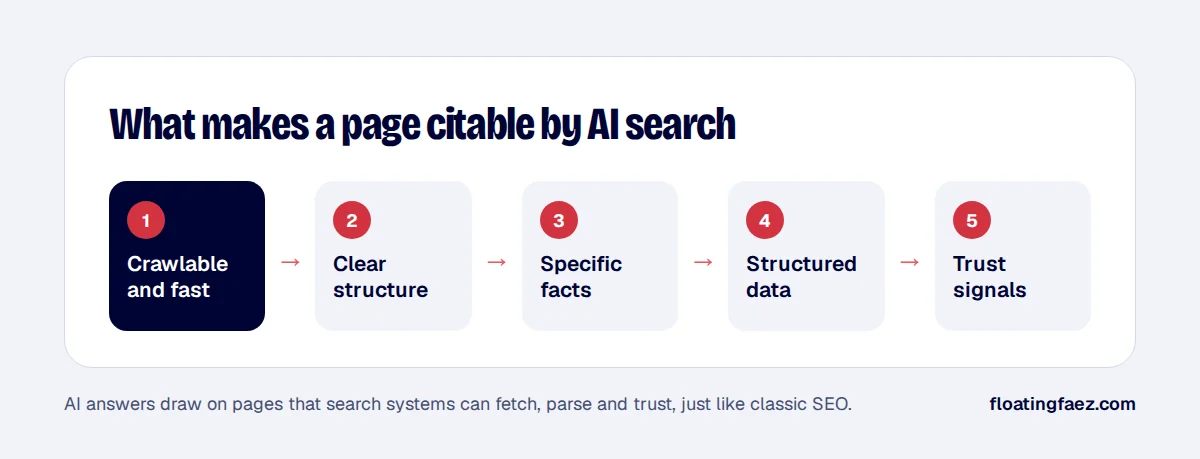
3. Add structured data
Schema markup tells machines what a page is about. For stores, Product with Offer (price, availability, currency), shipping details, return policy and reviews. For service businesses, Service, Organization or LocalBusiness, and FAQPage where it fits. Rank Math and WooCommerce output much of this, but check it in Google’s Rich Results Test.
4. Build trust signals
- A real About page, author names on articles and clear contact details.
- Reviews on your own site and on third-party platforms.
- Mentions and links from respected sites in your niche. AI systems lean on sources the wider web already trusts.
5. Keep product feeds accurate
Google Shopping data and merchant feeds increasingly feed AI shopping experiences. Keep prices, stock and shipping in your Merchant Center feed accurate and in sync with your site.
How to measure it
Ask the questions your customers ask in ChatGPT, Gemini and Perplexity, and note whether you’re cited. In GA4, watch referral traffic from chatgpt.com, perplexity.ai and similar sources. It’s small for most sites today, but growing.
None of this replaces classic SEO; it’s classic SEO done thoroughly. If you’d like an audit of how ready your site is, book a free call.